
Nicolas Batum Retires After 18 Seasons
Announcing his retirement after 1,205 NBA games and two Olympic silver medals with France, Nicolas Batum leaves a legacy as one of the quintessential glue-guy forwards in basketball history.
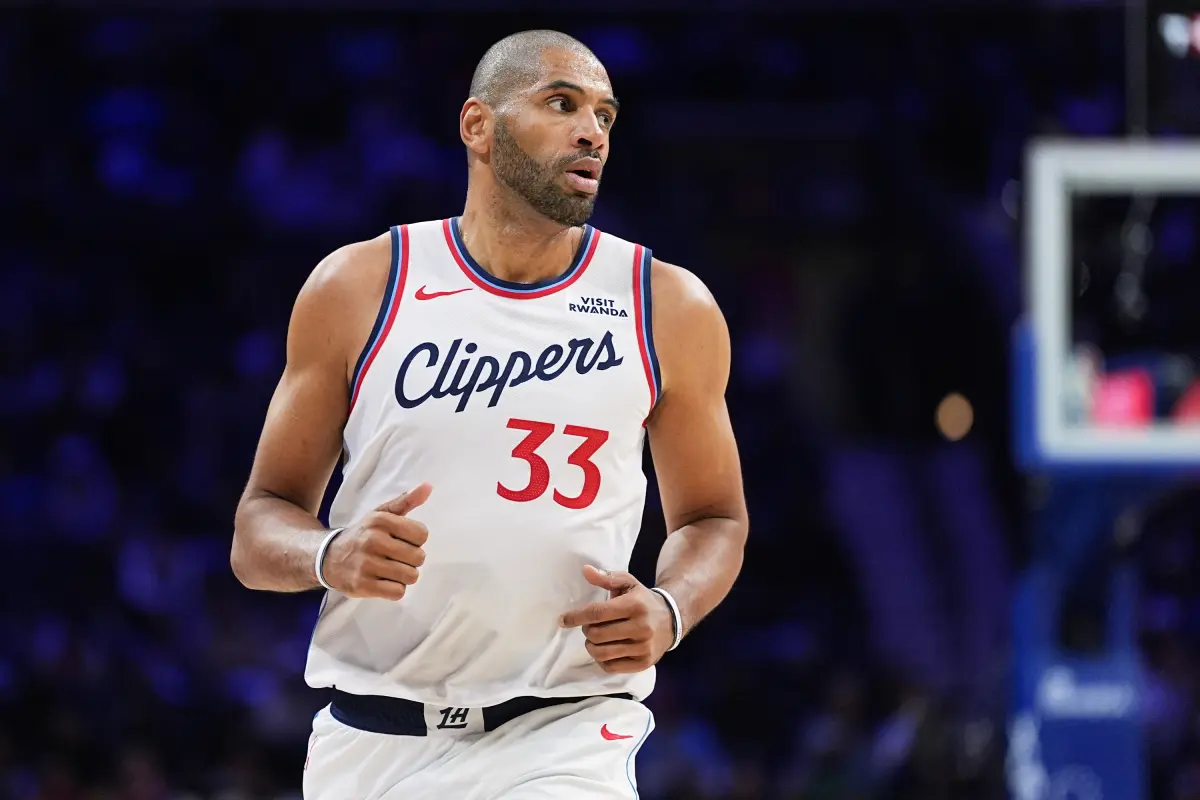
French forward Nicolas Batum officially announced his retirement from professional basketball on Monday, September 21, 2026, bringing an end to an 18-season NBA career. The 37-year-old veteran shared a video on social media from his childhood gym in France, concluding 21 years of professional basketball across 1,205 NBA regular season games. The retirement date carried deep emotional resonance, falling on the exact anniversary of his father Richard Batum’s tragic passing on a basketball court in 1991. Batum finishes his career averaging 9.6 points, 4.7 rebounds, and 3.0 assists per game, having established the operational standard for versatile connector wings.
Portland Beginnings and the Rise of the Modern 3-and-D Wing
Selected 25th overall in the 2008 NBA Draft by Houston, Batum’s draft rights were acquired by Portland on draft night to begin his NBA journey. Over seven impactful seasons with the Trail Blazers, he appeared in 481 games while averaging 11.2 points, 5.1 rebounds, and 3.0 assists. His best overall campaign arrived in 2013-14, when he started all 82 games and averaged 13.0 points, 7.5 rebounds, and 5.1 assists alongside Damian Lillard and LaMarcus Aldridge. In Portland, Batum popularized the chase-down block, secondary playmaking, and corner three-point shooting that modern front offices covet.
His defensive instincts allowed head coach Terry Stotts to deploy him against premier perimeter scorers across the Western Conference. Batum’s ability to initiate transition offense after securing defensive rebounds relieved pressure on Portland’s primary ball-handlers. His perimeter versatility proved that non-primary scoring wings could dictate game flow through high-IQ positioning. That seven-year tenure cemented his standing among Rip City fans and established his reputation across the league.
Charlotte Capital Expansion and Front-Office Valuation
Traded to the Charlotte Hornets in June 2015, Batum’s unique skillset commanded a massive five-year, 120 million dollar contract extension in 2016. He posted career-high averages of 15.1 points and 5.9 assists per game during the 2016-17 season, operating as Charlotte’s primary secondary ball-handler. His contract underscored how modern salary cap economics placed a premium on wings capable of initiating half-court sets. Batum later navigated late-contract buyouts to pivot seamlessly into his late-career role player renaissance.
Clippers Longevity and Tactical Synergy
Batum joined the Los Angeles Clippers in 2020, becoming an indispensable small-ball center and corner-three specialist across five seasons. He transitioned between starting and reserve duties, providing elite team defense, passing vision, and reliable 40 percent perimeter shooting. Finishing tied for 29th in NBA history with 1,842 career three-pointers, Batum delivered essential tactical flexibility for head coach Tyronn Lue. His brief 2023 stint in Philadelphia further confirmed his ability to elevate playoff rotations without demanding offensive touches.
International FIBA Dominance and French Basketball Legacy
Beyond his NBA impact, Batum anchored the French national basketball team for 15 years across 150 international games. He captured two Olympic silver medals in Tokyo 2020 and Paris 2024, alongside two FIBA World Cup bronze medals in 2014 and 2019. His game-saving block against Slovenia in the Tokyo Olympic semifinals stands among the most famous defensive plays in international basketball history. Batum retires as one of the most decorated French forwards of all time, alongside legends Tony Parker and Boris Diaw.
Strategic Takeaways for Modern Roster Architecture
Batum’s 18-year tenure serves as an operational masterclass in role adaptation and positional longevity. Front-office analytics departments across the league now actively seek wings who mirror Batum’s high basketball IQ, low usage rates, and multi-positional defense. Transitioning from a high-usage secondary scorer into a low-usage connector extends athletic longevity in modern cap environments. His journey from Lisieux to Rip City and Los Angeles cements his standing as a global basketball icon.
SOURCES
- Versatile French Forward Nicolas Batum Retiring Following 18-Year NBA Career, Newsday
- Nicolas Batum Retires After 18 NBA Seasons, Times of India
- Nicolas Batum Announces Basketball Retirement at 37, Field Level Media
- Nicolas Batum Career Stats and History, Basketball Reference
PHOTO SOURCE:
LA Times