
Steph Curry Reveals He Played With Blurred Vision During Warriors Dynasty
In a revelation about Golden State’s championship run, Stephen Curry disclosed that he won two MVPs and two titles with uncorrected blurred vision caused by keratoconus.
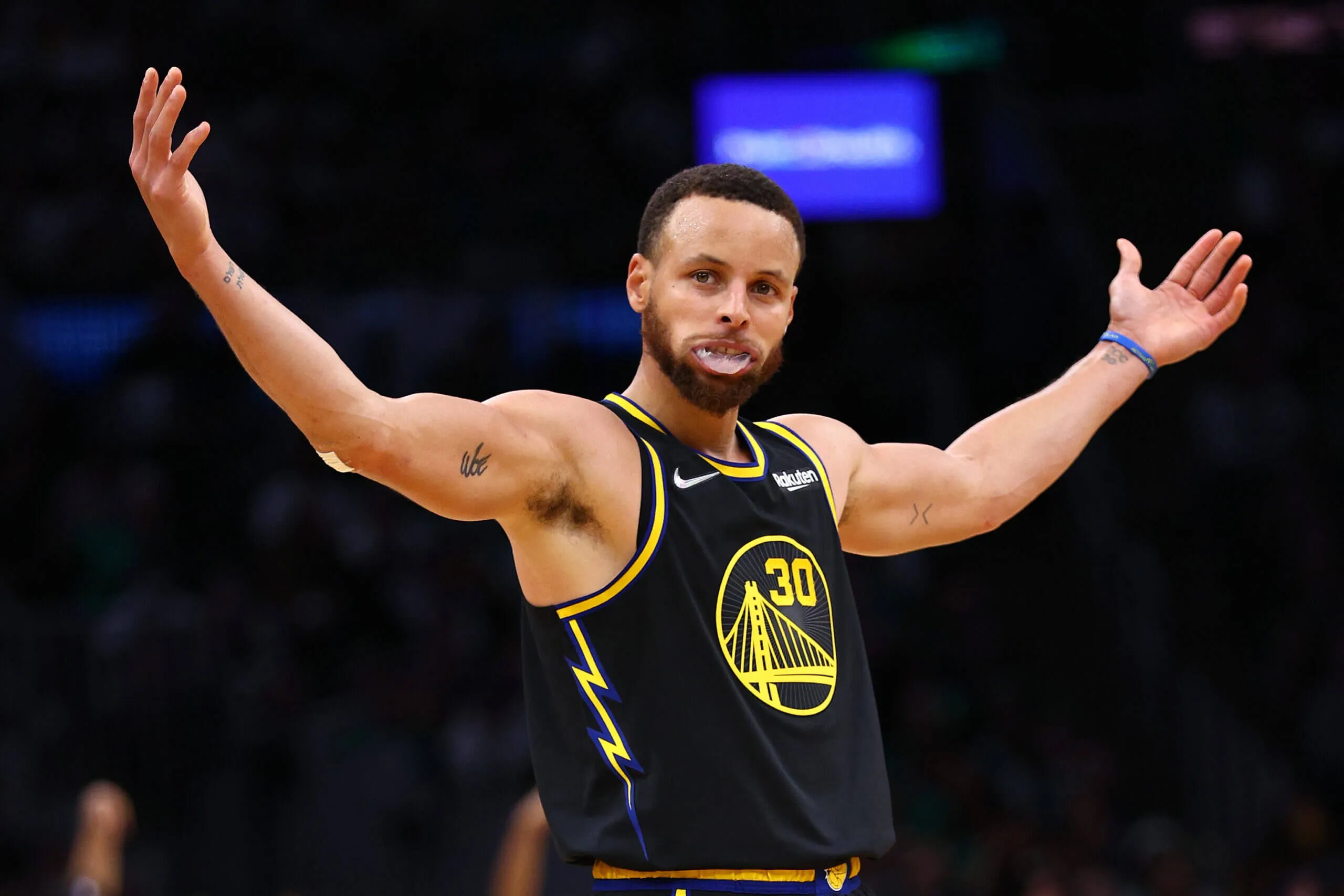
Golden State Warriors superstar Stephen Curry revealed new details regarding a hidden physical disadvantage during the peak of the Warriors’ championship dynasty. Speaking with Natasha Dye of People magazine, the two-time Most Valuable Player explained that he played with uncorrected blurred vision prior to a 2018 medical diagnosis. Ophthalmologists diagnosed Curry with keratoconus, a progressive eye condition characterized by an irregularly shaped cornea that creates blurred and distorted images. Despite operating with compromised eyesight, Curry established himself as the greatest shooter in basketball history while securing two MVP awards and two NBA titles.
The Bob Myers Text and Diagnostic Discovery
Curry’s condition remained undetected through the early years of his career because he simply adapted to his distorted visual field. Former Golden State General Manager Bob Myers first raised concerns after observing Curry squinting heavily on the bench during a road telecast. Myers sent Curry a text message suggesting an immediate optometric evaluation to determine why his visual focus appeared compromised. Clinical testing subsequently revealed keratoconus, an irreversible condition requiring specialized contact lens therapy rather than surgical intervention.
Transitioning to specialized scleral contact lenses in early 2019 immediately resolved the blurriness, ending a rare nine-game perimeter shooting slump. Curry noted that before receiving corrective lenses, he assumed everyone perceived court surroundings with similar visual distortions. Joking that his future memoir should be titled The Whole Time I Couldn’t See, Curry now maintains strict bi-annual eye examinations. The revelation underscores how Curry compensated for progressive visual impairment during the most dominant shooting stretch in league history.
Spatial Mechanics and Neuromuscular Shooting Memory
From a sports biomechanics perspective, Curry’s ability to hit deep logo three-pointers while suffering from distorted vision relies on extraordinary muscle memory. Elite marksmen utilize proprioception and spatial awareness to calculate rim distance independent of crystal-clear visual feedback. By relying on repetitive release mechanics, Curry maintained historic shooting percentages despite blurry target outlines. Biomechanical analysts evaluate his motor control as an extraordinary display of sensory adaptation under high-leverage conditions.
Furthermore, Curry’s shooting mechanics remained uniform regardless of defensive pressure or visual interference. Muscle memory developed over hundreds of thousands of practice shots allowed him to execute quick-release jumpers without relying on detailed depth perception. When corrective contact lenses were introduced, his shooting percentages experienced an immediate statistical surge across deep three-point attempts. This seamless adaptation illustrates how top-tier athletes integrate medical interventions to optimize late-career performance.
Front-Office Health Protocols and Medical Risk Management
Curry’s diagnostic timeline offers critical operational takeaways for NBA sports medicine departments and front-office executives. Routine player health evaluations historically focused on orthopedic stability, cardiovascular health, and soft-tissue recovery. Myers noticing a minor visual symptom highlights the necessity of comprehensive sensory screening protocols across professional franchises. Identifying progressive conditions early protects multi-million dollar athletic assets while extending championship windows.
Modern sports medicine staffs now incorporate advanced corneal topography and specialized vision testing into routine annual physicals. Treating progressive conditions like keratoconus prevents vision deterioration from compromising an athlete’s career trajectory. For executive leadership, maintaining proactive health monitoring directly safeguards roster investment value. Ensuring players operate with optimal sensory input maximizes performance efficiency across dense regular-season schedules.
Legacy Impact and the Unprecedented Dynasty Narrative
Uncovering Curry’s vision struggles adds a compelling layer to Golden State’s four-championship legacy. Winning unanimous MVP honors in 2016 while operating with blurred vision elevates his standing among basketball’s all-time icons. The revelation reinforces how his revolutionary range reshaped offensive geometry across professional sports. Modern fans and front offices gain a deeper appreciation for the technical mastery behind his historic shooting resume.
As Curry enters his eighteenth NBA season, his proactive eye care routine ensures sustained elite performance. Overcoming progressive visual impairment while setting every major three-point record cements his status as a generational pioneer. Golden State’s front office and global sports analysts will continue studying his career as the ultimate study in elite athletic resilience.
SOURCES
- Steph Curry Played With Major Disadvantage During Warriors’ Dynasty Run, Heavy
- Stephen Curry Reveals Rare Condition He Has Had Since Warriors Dynasty, BasketNews
- NBA Fans in Disbelief After Stephen Curry’s Rare Irreversible Eye Condition Comes to Light, EssentiallySports
- Stephen Curry Opens Up About Having Blurry Vision During Dynasty Run, People Magazine / Natasha Dye
PHOTO SOURCE:
Getty Images