
Spain World Cup Victory Triggers National Socio Political Transformation
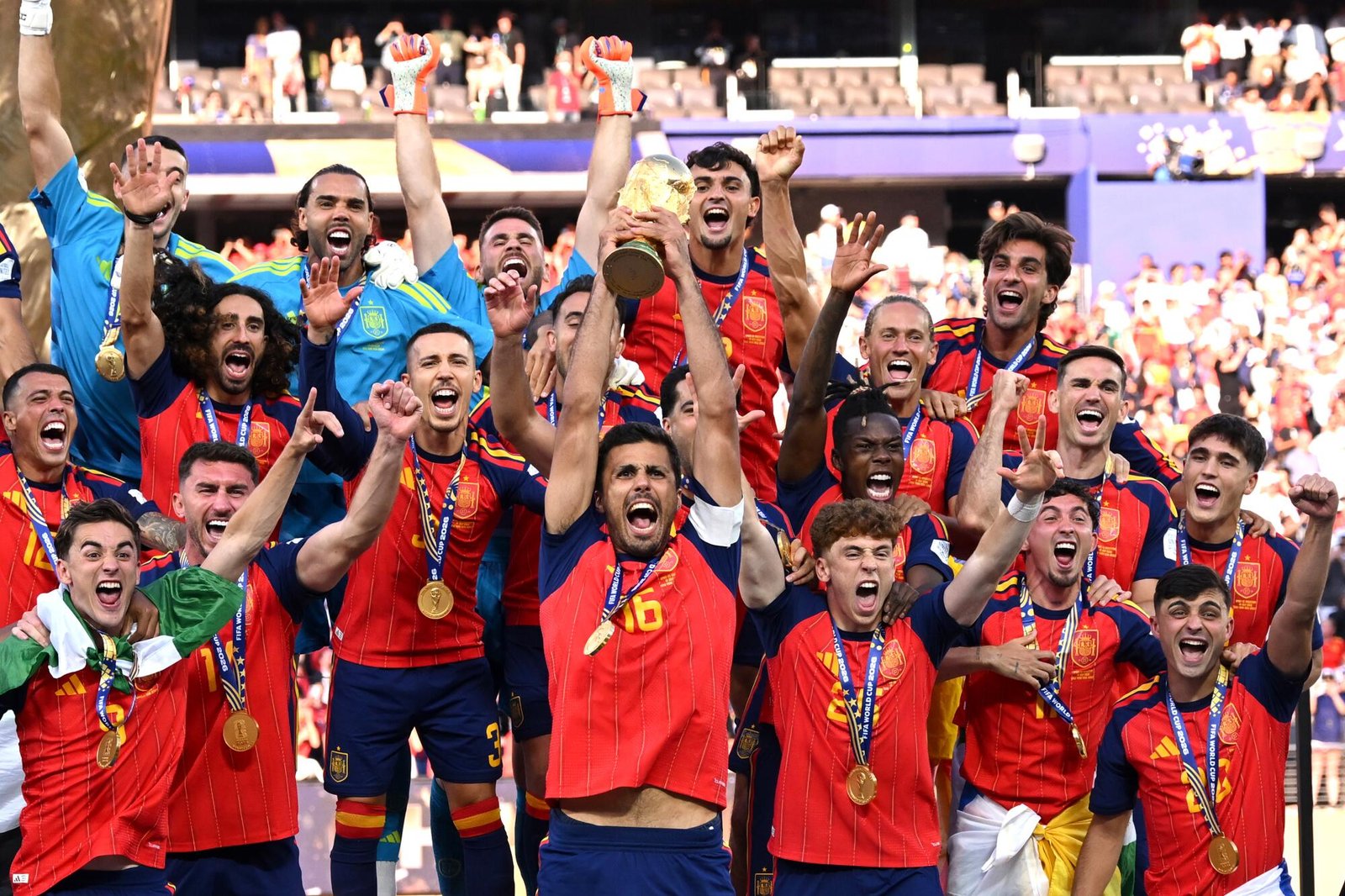
Spain’s national football team secured its return to global supremacy with a one to zero extra time victory over Argentina at MetLife Stadium, capping an extraordinary tournament run.
Beyond the athletic achievement on the pitch, the victory arrives at a pivotal moment for Spanish society, where sports governance, financial accountability, and politics are deeply intertwined. National team success has historically functioned as a complex mirror for the country’s internal regional dynamics, political factionalism, and institutional accountability.
Executive leadership across European football is now watching closely as Spain’s sporting triumph intersects with ongoing national debate regarding federal governance and corporate reform.
Institutional Reform and Governance Restructuring in Spanish Football
The financial and administrative oversight of the Royal Spanish Football Federation has undergone intense public scrutiny following years of executive controversy and institutional restructuring. Public pressure from federal government bodies and athlete advocate groups has forced systemic transparency initiatives upon federation leadership. High-level leadership turn-overs have established new benchmark standards for corporate governance across European governing bodies. Commercial sponsors and institutional equity partners now demand clear compliance frameworks and ethical oversight before renewing multi-million dollar corporate partnerships.
Sponsorship portfolios are being re-negotiated to reflect higher corporate standards, shifting away from legacy backroom deal-making toward structured institutional transparency. The modern Spanish football ecosystem is proving that enterprise value depends heavily on organizational integrity and brand safety. Major multinational corporations sponsoring the national team are linking capital deployment directly to verified governance metrics. Consequently, front-office executives across La Liga and international federations are adopting formalized compliance divisions to protect long-term franchise equity.
Regional Identity and the Politics of National Representation
The composition of Spain’s national roster highlights the evolving relationship between regional identity and national unity in a decentralized state. Featuring key talent originating from Catalonia, the Basque Country, and Andalucia, the squad represents a modern cross-section of a culturally diverse nation. In historically autonomous regions, public watch parties and civic celebrations signaled a pragmatic shift in how younger demographics engage with national team representation. Sports broadcasting networks recorded historic viewership metrics across traditional regional strongholds, demonstrating the unifying commercial power of international sporting success.
Political leaders across Madrid and regional capitals have utilized the championship to promote contrasting political narratives regarding civic unity and regional autonomy. While central government officials emphasize national cohesion, regional political figures highlight local academy investment and regional talent development pipelines. This dual narrative reflects the nuanced reality of contemporary Spain, where regional pride coexists alongside collective national achievement. The success of young stars on the global stage has transformed national team fandom into a broader cultural conversation about modern Spanish identity.
Gender Parity Mandates and Cultural Equity Initiatives
The socio-political momentum surrounding Spanish football builds directly upon the cultural foundation set by the women’s national team World Cup victory and subsequent player advocacy movements. Social campaigns initiated by elite athletes have successfully challenged outdated institutional hierarchies across national sports organizations. Legislative bodies in Madrid have responded by introducing federal sport regulations mandating gender parity, equal facility access, and equitable compensation structures. These policy changes have transformed Spanish sports administration into a global case study for athlete-led institutional reform.
Corporate investment in grassroots facilities and youth development academies has expanded rapidly as a direct result of these legislative mandates. Municipal governments are allocating public infrastructure funds toward modernizing local training grounds and regional sports complexes. Institutional investors view these policy reforms as critical risk-mitigation measures that stabilize long-term athletic development pipelines. The alignment between government legislation and private capital deployment is creating a sustainable financial model for Spanish athletic infrastructure.
Broadcasting Revenue Distribution and Modern Sports Economics
The national team’s success comes at a time when domestic football rights fees and international broadcasting deals are undergoing structural reorganization. La Liga executives are leveraging global interest in Spanish stars to expand international broadcasting footprints across North America and Asian markets. Increased international rights revenue provides critical balance-sheet relief for domestic clubs navigating strict financial fair play regulations. Revenue distribution models are being revised to ensure mid-table clubs receive adequate capital to maintain competitive squad depth.
Private equity groups holding strategic stakes in Spanish football commercial operations are accelerating digital media monetization and direct-to-consumer platforms. Modern fan engagement strategies are driving record merchandise sales and international membership growth across major European markets. Front offices are utilizing advanced data analytics to target international consumer segments and expand global brand presence. This commercial framework ensures that national team glory translates into measurable enterprise value for domestic football infrastructure.
The convergence of athletic dominance and socio-political evolution positions Spain as a central player in modern global sports economics. Football in Spain no longer operates in an isolated cultural vacuum, but serves as a primary vehicle for national modernizing initiatives and institutional transparency. Front offices and international governing bodies that understand the intersection of athletic success, corporate governance, and societal values will lead the future of elite sports enterprise.
SOURCES
- LeBron James Says He Will Play for Philadelphia 76ers, ABS-CBN Sports, https://www.abs-cbn.com/sports/basketball/2026/7/24/lebron-james-says-he-will-play-for-philadelphia-76ers-2358
- When Is LeBron James’ Philadelphia 76ers Debut?, NBC Sports, https://www.nbcsports.com/nba/news/when-is-lebron-james-philadelphia-76ers-debut-date-tv-stream-info-for-sixers-vs-knicks-opening-night
- NBA Schedule Features Philadelphia 76ers in Primetime Opening Week Slates, The Sixer Sense, https://thesixersense.com/nba-gave-76ers-perfect-first-home-game-after-lebron-james-decision
- NBA Second-Apron Cap Dynamics and Roster Construction Models, ESPN, https://www.espn.com/nba/story/_/id/40512345/nba-free-agency-cap-second-apron-analysis
PHOTO Source
- Originally posted on LA Times | By Kevin Baxter | https://www.latimes.com/sports/soccer/story/2026-07-19/spain-defeats-argentina-for-first-world-cup-title-since-2010