
Jordan, James, And Bryant: Who Is The Real GOAT?
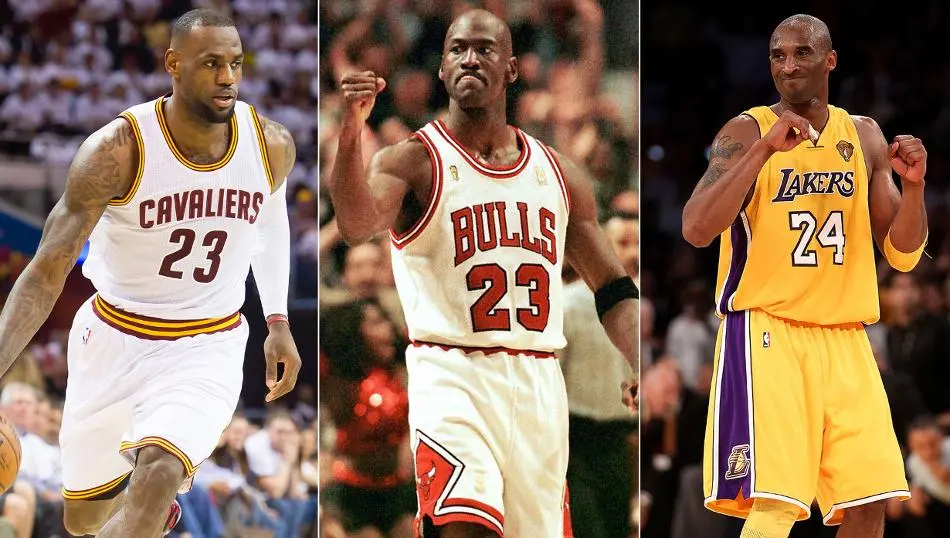
The ongoing evaluation of Michael Jordan, LeBron James, and Kobe Bryant represents far more than subjective media debate for modern basketball executives. Front-office analysts, institutional investors, and sports economists evaluate these three iconic figures through distinct financial and operational frameworks: peak championship efficiency, sustained career longevity, and global brand monetization. Each legend established a distinct economic template for franchise value creation during their respective eras. Analyzing their individual career profiles through objective performance metrics clarifies how elite superstardom translates into enterprise equity.
Peak Championship Efficiency and Unblemished Finals Valuation
Michael Jordan established the gold standard for peak operational efficiency by securing six NBA championships in six Finals appearances with the Chicago Bulls. Averaging 30.1 points per game over his career, Jordan captured six Finals MVP awards, five regular season MVPs, and ten scoring titles. His dominant run during the 1990s delivered unprecedented return on investment for Chicago, transforming the franchise into a multi-billion dollar enterprise asset. Jordan’s ability to maintain peak efficiency during high-leverage championship series established an unblemished postseason record that remains the benchmark for competitive perfection.
Beyond on-court production, Jordan revolutionized corporate athlete endorsement equity by launching the Jordan Brand in partnership with Nike. That strategic equity model created a perpetual revenue stream that continues to generate billions in global annual retail sales. Front offices evaluate Jordan’s career as the ultimate demonstration of short-term championship consolidation and high-margin brand expansion. His era proved that absolute postseason dominance generates permanent institutional equity for both franchise and athlete.
Sustained Longevity and Cumulative Enterprise Expansion
LeBron James redefined superstar career longevity by maintaining elite production across twenty-three professional seasons with Cleveland, Miami, and Los Angeles. As the NBA’s all-time leading scorer with over 40,000 career points, James has accumulated four NBA championships, four regular season MVPs, and four Finals MVP awards. His sustained excellence across multiple decades created unprecedented flexibility for front offices, enabling three distinct franchises to capture championships around his primary talent. James demonstrated that long-term physical durability maximizes corporate sponsorship retention and franchise media rights valuation.
In addition to his record-setting statistical volume, James pioneered modern player empowerment by leveraging short-term contract structures to dictate roster architecture. His business entity, SpringHill Company, expanded his commercial footprint into media production, institutional real estate, and multi-team sports equity investments. Executives view James as the premier model for cumulative asset accumulation and sustained operational relevance. His career proves that two decades of top-tier performance yield compounding commercial returns that transcend traditional single-franchise models.
Shot Creation Mastery and Uncompromising Competitive Equity
Kobe Bryant carved out his legacy through elite scoring versatility, defensive tenacity, and uncompromising competitive drive during a twenty-season career with the Los Angeles Lakers. Winning five NBA championships, two Finals MVPs, and the 2008 regular season MVP, Bryant anchored two distinct title eras in Southern California. His ability to execute difficult shot-making in tight fourth-quarter possessions generated immense commercial value for the Lakers and national television networks. Bryant’s relentless work ethic, codified as the Mamba Mentality, established a lasting cultural brand that continues to resonate across global markets.
Bryant’s commercial influence extended deeply into international markets, particularly in China, where his popularity drove unprecedented merchandise sales and league expansion. His venture capital firm, Bryant Stibel, successfully deployed private equity into high-growth technology and consumer beverage brands before his passing. Front offices study Bryant’s career as a masterclass in single-franchise brand loyalty and localized media dominance. His twenty-year tenure in Los Angeles proved that deep market alignment creates immense long-term equity for a primary sports market.
Synthesizing Modern Valuation Frameworks for Sports Executives
Determining the definitive greatest player depends entirely on which operational metrics a front office prioritizes for franchise building. Executives prioritizing peak championship conversion and absolute Finals dominance favor Jordan’s unblemished six-ring resume. Decision-makers valuing multi-decade durability, cumulative statistical output, and roster flexibility lean toward James’ twenty-three-year career footprint. Meanwhile, leaders focused on elite shot creation, defensive grit, and single-franchise brand loyalty point to Bryant’s five-title tenure in Los Angeles.
The debate ultimately highlights how elite athletic talent catalyzes global sports finance, media rights valuation, and corporate athlete branding. Michael Jordan, LeBron James, and Kobe Bryant each constructed distinct pathways toward global sporting supremacy and financial equity. Front offices that understand the underlying mechanics of their respective careers will continue to shape the future of NBA franchise management.
SOURCES
- Michael Jordan Career Statistics and Honors, Basketball-Reference
- LeBron James Career Statistics and Record-Breaking Leaders, Basketball-Reference
- Kobe Bryant Career Statistics and Championship Summary, Basketball-Reference
- NBA All-Time Scoring Leaders and Historical Franchise Valuations, StatMuse
SOURCES
- Photo by CavsNation